


Shipper | Blog 3 min. read
What is cross-border shipping? Your expansion roadmap

Key takeaways:
- Cross-border shipping moves freight between countries while complying with customs, trade and transportation regulations.
- Successful cross-border shipping requires proper documentation, customs coordination and carrier expertise.
- U.S.–Mexico shipping presents unique opportunities and operational challenges for manufacturers and shippers.
- Working with an experienced transportation provider can improve transit reliability, visibility and compliance.
In today’s global economy, the question isn’t if your business should expand beyond borders — it’s how. Cross-border shipping has become a cornerstone of modern commerce. With cross-border trade opportunities, companies of all sizes can reach new markets, diversify their customer base and unlock new revenue streams.
But what is cross-border shipping, exactly? And how can it work for your business?
What is cross-border shipping?
Cross-border shipping refers to the transportation of freight between different countries while complying with customs regulations, import/export requirements and international trade laws. Cross-border shipping is a key component of cross-border logistics, which encompasses the full process of transporting goods across national boundaries.
With cross-border shipping, businesses tap into new demand while leveraging cost efficiencies through nearshoring (the outsourcing of business processes to a company in a neighboring country) and regional trade agreements.
How does cross-border shipping work?
The cross-border shipping process involves five key steps:
Order fulfillment and packaging
Goods are prepared for international transit, often with specific labeling and documentation requirements.
Transportation mode selection
Depending on distance, cost and urgency, select one or both of the following modes:
- Truckload for direct, over-the-road delivery.
- Intermodal for a cost-effective mix of rail and truck.
Customs documentation and clearance
Accurate paperwork, including commercial invoices, certificates of origin and customs declarations, is essential to avoid delays.
Border crossing and inspection
Goods are inspected and cleared by customs authorities before entering the destination country.
Final delivery
Once cleared, shipments are delivered to the end customer or distribution center.
Cross-border shipping strategy starts here
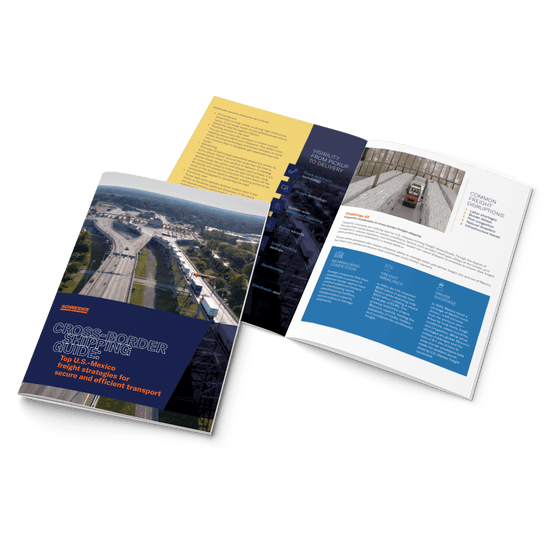
Navigate top U.S.-Mexico freight challenges with this free cross-border shipping guide.
The rise of cross-border shipping
Global e-commerce, regional trade partnerships and shifting supply chain strategies have made cross-border shipping more accessible and essential than ever. In fact, in 2024, the U.S. and Mexico became each other’s trading partner. In 2025, the two countries traded a record high in total goods of more than $870 billion.
Businesses are turning to cross-border shipping to:
- Increase revenue by accessing new customer bases
- Improve supply chain efficiency through nearshoring
- Diversify risk by expanding beyond domestic markets
- Stay competitive in a globalized economy
Top 3 challenges of cross-border shipping between the U.S. and Mexico
Cross-border shipping between the U.S. and Mexico is complicated, no matter the mode. Whether you're new to cross-border shipping or a seasoned expert, understanding the challenges is essential.
Thieves target freight in the U.S. and Mexico
From January through October 2025, 5,204 cargo theft incidents occurred in Mexico. CargoNet reported 3,594 theft incidents across the U.S. and Canada in 2025. Cargo theft is a growing problem in the U.S. For companies engaged in cross-border shipping from the U.S. to Mexico, cargo security measures must be a top priority.
Capacity constraints can increase costs
Capacity concerns are nothing new for U.S. shippers moving freight domestically. Capacity constraints vary by market, but common factors include:
- Labor shortages
- Delays at the border
- Port congestion
- Natural disasters
- Infrastructure issues
- Regulatory changes
These changes make it challenging for shippers to deliver freight on time. This leads to problems with costs and delivering freight into and out of Mexico.
Customs compliance adds complexity to the shipping process
Mexico-bound freight is touched by at least six different entities. This creates opportunities for...
- Inefficiency
- Low visibility
- Unclear accountability
Errors made along the way can have serious repercussions. And the most overlooked part of a cross-border move? The paperwork.

The opportunity beyond borders
Cross-border shipping comes with complexities. However, the growth opportunities can outweigh the challenges when approached strategically. By expanding beyond borders, businesses can:
- Grow revenue in high-demand international markets
- Reduce costs through nearshoring and regional sourcing
- Build resilience by diversifying your supply chain
- Enhance customer experience with faster, localized delivery
Ready to explore cross-border trade opportunities?
Understanding cross-border shipping fundamentals is just the beginning. To truly capitalize on cross-border trade opportunities, you need a strategy tailored to your business model, product and target markets.
Cross-border shipping strategy starts here
Navigate top U.S.-Mexico freight challenges with this free cross-border shipping guide.
Cross-border resources
Drive your business forward
Sign up to receive our industry leading newsletter with case studies and insights you can put to use for your business.