


Shipper | Blog 5 min. read
The new face of freight fraud: what shippers need to know
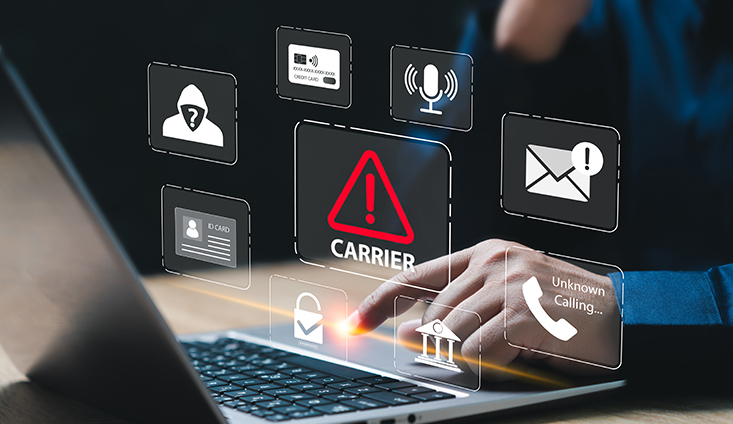
Freight fraud is no longer a single threat. It’s a layered, evolving challenge that demands a more responsible approach to managing and protecting freight — one that spans physical theft, digital intrusion and identity-based schemes working together.
For shippers, that shift matters. What worked five or even ten years ago is no longer enough to protect freight or maintain control. Today’s threat landscape is faster, more coordinated and increasingly difficult to detect. Understanding how cargo theft trends are evolving is the first step toward staying in control.
Key takeaways
- Cargo theft is no longer just a physical security issue — today’s fastest-growing threats often begin digitally, making early validation and stronger oversight essential to protecting freight.
- Modern freight fraud relies on control of the transaction, not just the cargo, reinforcing the need for rigorous carrier vetting, shipment visibility and continuous monitoring.
- The most effective cargo security strategies combine people, processes and technology in a layered approach that helps identify risks early and maintain control across the supply chain.
The growing cost of cargo theft
The stakes continue to rise. Industry estimates put the cost of cargo theft as high as $6.6 billion annually, with average shipment values increasing as criminals target higher-value loads.
Recent data underscores how quickly the problem is accelerating. According to CargoNet’s 2025 Theft Report, estimated losses surged 60% to nearly $725 million, while confirmed cargo theft incidents increased 18%. At the same time, the average value of stolen shipments rose 36% to $273,990, driven by more selective, high-value targeting by organized groups.
For shippers, the impact extends beyond financial loss. Every disrupted load carries downstream consequences for operations, customer commitments and brand trust — raising the stakes for responsible, proactive risk management across the supply chain.
The evolution of cargo theft trends: 3 methods reshaping risk
1. Freight scams and cyber-enabled fraud are changing where theft begins
The biggest shift in cargo theft isn’t happening on the road — it’s happening upstream.
Freight scams now often begin in the digital supply chain, before freight is ever picked up. Email compromise, spoofed documents and fraudulent load bookings allow bad actors to gain access to shipments earlier in the transaction.
This type of activity—often referred to as strategic theft—relies on advanced cyber tactics to trick shippers, brokers and carriers into handing over legitimate loads. In recent years, this high-tech form of cargo theft has surged dramatically, increasing as much as 1,500% since 2021.
“There are really two different supply chains going on with every transaction: the physical supply chain and the digital supply chain,” explains Justin Sachs, director of product management for Schneider FreightPower. “Today’s threat is the convergence of both. Criminals get into the process digitally, then use that access to steal the freight — and it can take weeks before it’s clear something went wrong.”
Technology is accelerating this shift. Fraudsters can scale their efforts faster than ever, increasing both the volume and complexity of attacks and elevating overall supply chain cyber risk.
The result: In many cases, freight is effectively compromised before it ever moves.
2. Identity-based theft: when criminals become “your carrier”
One of the fastest-growing threats is identity-based fraud, where criminals don’t just gain access to a shipment, they take control of how it moves.
Once bad actors get inside a transaction, they can pose as a legitimate carrier, book a load and then hand it off to another carrier, sometimes without anyone realizing what’s happening.
This often plays out through double brokering. A fraudulent carrier accepts a load, then reposts it or assigns it to a legitimate carrier. That carrier completes the pickup and delivery, unaware that the shipment has already been compromised.
In these scenarios, the fraud doesn’t stop at booking. Criminals can continue manipulating the shipment as it moves — changing delivery locations, diverting freight and, in some cases, feeding false tracking updates to maintain the illusion that everything is proceeding as expected.
The result is a coordinated effort where multiple parties may be involved — some knowingly, others not — all contributing to the movement of stolen goods.
This is no longer just about gaining access. It’s about controlling the transaction end to end.
3. Process gaps still create easy opportunities for theft
Even as threats become more advanced, many theft incidents still occur because of breakdowns in process. Often, the risk comes down to whether consistent, foundational practices are in place — and followed.
Physical security measures
At shipping and receiving facilities, that means having the right physical security measures in place, such as controlled access points, cameras, lighting and clear procedures for who can enter and exit. Without that infrastructure, freight can be exposed before it ever leaves the facility.
Pickup stage
The pickup stage is a critical point for freight validation. Rather than providing pickup information up-front, shippers should ask drivers to supply the details and verify that the information is accurate. For higher-value shipments, additional checks, such as confirming the truck number, can help identify discrepancies that may signal potential fraud or theft.
Supply chain visibility
Across the supply chain, visibility and control depend on layered protections, including tracking, secure communication and clearly defined handoffs. If a shipment is “dark” at any point — without reliable tracking or confirmation — it becomes easier for something to go wrong.
Personnel
Personnel also play an important role. Having people accountable for security, trained to recognize issues and empowered to pause a shipment when something seems off can make a significant difference, even if it creates delays.
“You have to decide where to invest. Security teams, tools and processes require time and resources, but they can help prevent losses that cost far more — in both dollars and brand reputation,” notes Kurtis Stephany, Schneider’s security services manager. “The more layers you have in place, the better chance you have of stopping theft before it happens.”
Basic transparency, such as clearly identifying what is being shipped and its value, can also help ensure the right protections are applied at the right time.
These gaps highlight a critical point: Not all risk comes from sophisticated threats. In many cases, it comes from inconsistencies in execution.
How can shippers minimize freight fraud risk?
Across all methods, one thing is clear: Cargo theft is no longer a single tactic — it’s a layered, coordinated challenge.
For shippers, that means cargo theft cannot be addressed with a single tactic.
Freight fraud is complex, but it is manageable with the right approach. Preventing loss now requires:
- Earlier validation in the transaction
- Stronger carrier vetting and continuous monitoring
- Greater transparency across the supply chain
- Consistent execution at every handoff
This shift reinforces a broader reality: Control is not achieved through any one tool or process — it comes from a coordinated, layered approach applied across people, processes and technology.
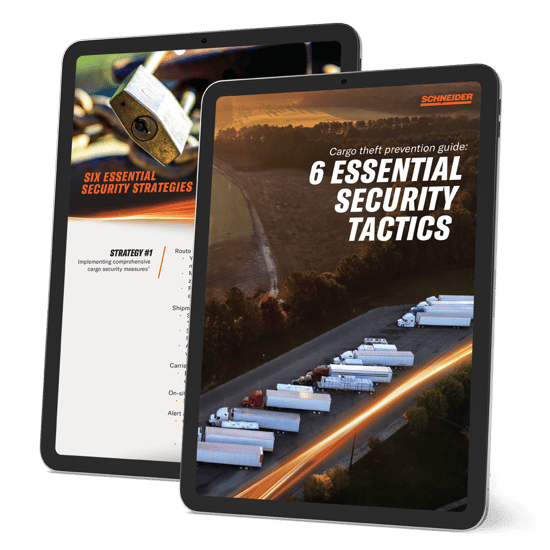
Unlock a modern, layered strategy
Learn what a modern, layered cargo security strategy looks like and how to apply it in your supply chain in Schneider’s cargo theft prevention guide.
Drive your business forward
Sign up to receive our industry leading newsletter with case studies and insights you can put to use for your business.